
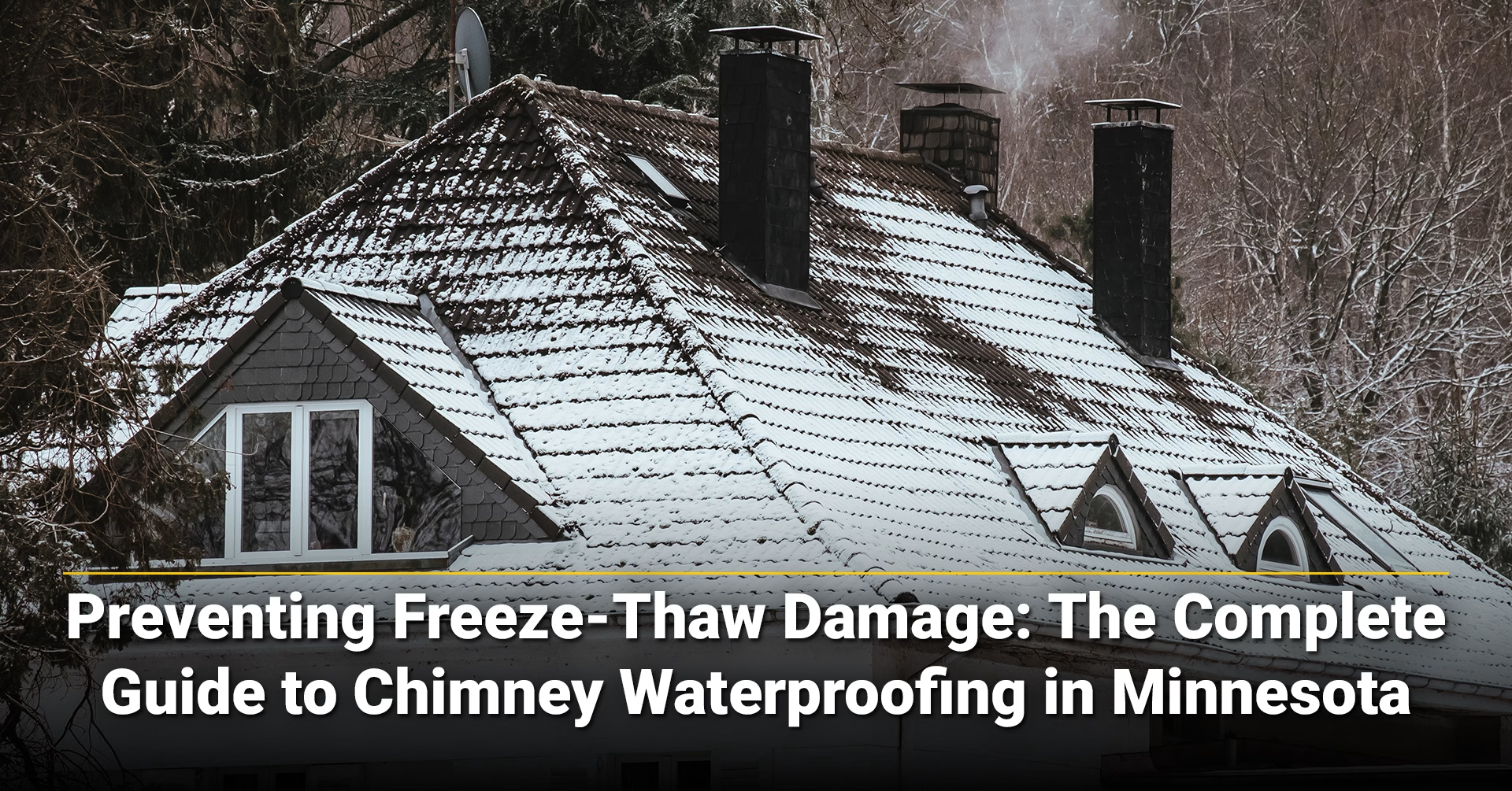

The timeless beauty and strength of stone masonry are defining features of many Minnesota homes. However, the very elements creating its durability also make it vulnerable to the state’s extreme weather. With over 90 freeze-thaw cycles annually, water is the primary enemy of stone, mortar, and the structural integrity they provide.
Our guide provides a proactive maintenance strategy for homeowners, designed to protect your investment in stone patios, walls, and facades for decades to come.
1. The Minnesota Adversary: Why Climate Dictates Your Maintenance Plan

Stone may seem impervious, but they’re a dynamic material. Performance and longevity are directly challenged by the Land of 10,000 Lakes’ specific environmental conditions.
A. The Relentless Freeze-Thaw Cycle
Water penetrates microscopic pores in the stone and mortar. When it freezes, it expands by 9%, creating immense internal pressure. Each cycle acts as a tiny hammer, slowly widening cracks and spalling (flaking) the stone surface. It’s the single most destructive force against masonry in the region.
B. Moisture Management: The Core Principle
The idea of maintenance is not to make stone waterproof, but managing moisture. Stone holds some naturally; the key is to prevent saturation and allow it to dry out efficiently. This is why techniques and products that allow the stone to “breathe” are essential.
C. The Corrosive Impact of Deicing Salts
Chloride-based salts and chemical ice melters don’t only pose a threat to concrete; they can degrade certain types of stone (like limestone and sandstone) and mortar. These chemicals can be absorbed, leading to accelerated surface erosion and internal cracking during freeze-thaw events.
2. The Proactive Maintenance Calendar: A Seasonal Guide

A consistent, seasonal routine is the most effective way to prevent small issues from becoming catastrophic failures.
A. Spring: The Assessment Season
As the snow melts and the ground thaws, spring is critical to uncover and assess any winter damage.
- Task 1: Thorough Inspection: Carefully examine all stone surfaces for new cracks, spalling, or heaving in patios. Check mortar joints for crumbling or gaps (weeping). Look for signs of efflorescence (white, powdery deposits), which indicates moisture movement.
- Task 2: Gentle Cleaning: Remove winter grime, salt residues, and organic growth (moss, algae). Use a stiff bristle brush and specialized stone cleaner (pH-neutral). Avoid acid-based cleaners and high-pressure washers, which etch the material and drive water deeper.
- Task 3: Plan Repairs: Identify any issues needing professional attention, including repointing or stone replacement, and schedule for completion during dry summer months.
B. Summer: The Repair and Protect Season
Dry, warm weather provides the ideal conditions for major maintenance tasks.
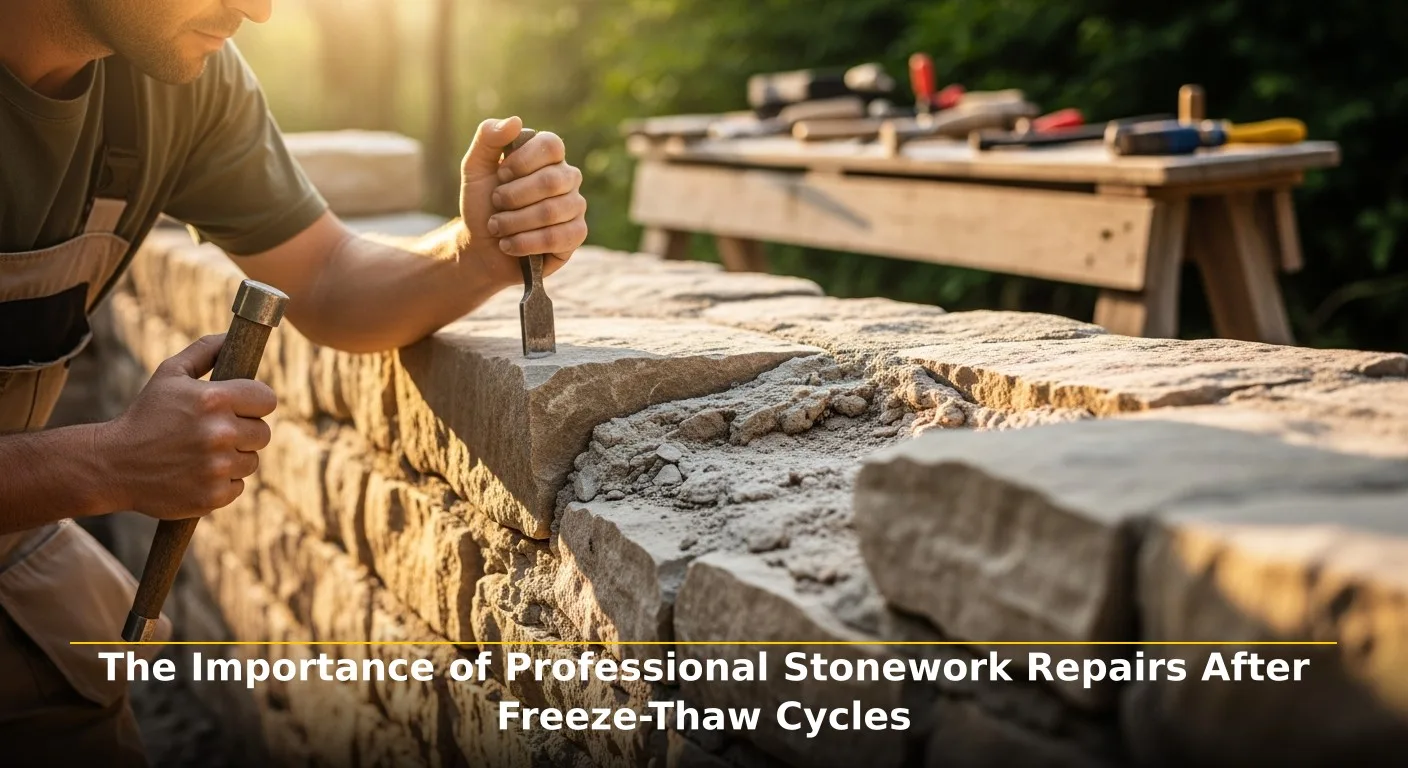
- Task 1: Repointing Mortar Joints: If you identified failing mortar in the spring, summer is the time for repointing. It involves grinding out the old, damaged mortar to a sufficient depth and replacing it with new, type-specific mortar. This is a job for professionals to ensure compatibility and proper tooling.
- Task 2: Apply Vapor-Permeable Sealant: Once surfaces are clean and completely dry (typically requiring 48-72 hours of dry weather), apply a professional-grade, vapor-permeable (breathable) sealant. These silane/siloxane-based products repel bulk water while allowing internal water vapor to escape.
- Note: Sealant is not a substitute for repairing cracks or mortar first.
- Task 3: Check Landscape Grading: Ensure soil neat stone walls and facades slopes away from the structure to direct surface water runoff away from the masonry.
C. Fall: The Preparation Season
The goal of fall maintenance is to prepare stonework for the impending freeze.
- Task 1: Clear Debris: Sweep patios and clear gutters. Clogged gutters cause water to overflow onto facades, creating saturation.
- Task 2: Final Inspection & Clean: Complete a quick visual check to ensure summer repairs are holding. Give patios a final cleaning to remove fallen leaves, which trap moisture and can stain the stone.
- Task 3: Protect Patios: Use plastic shovels rather than metal for snow removal. Stock up on sand or non-clay kitty litter for traction instead of corrosive deicing salts. If you must use ice melt, choose a product labeled as safe for concrete and masonry.
D. Winter: The Monitoring Season
Maintenance in winter is about minimizing harm.
- Task: Mindful Snow Removal: Be gentle. Avoid having metal edges or ice chippers on stone patios, as they can scratch and chip the surface. Keep snow piles away from stone walls to prevent prolonged moisture contact at the base.
3. Recognizing the Red Flags: Signs You Need Professional Help

While routine cleaning is a DIY task, certain problems require a mason’s expertise. Call a professional if you observe any of the following:
A. Structural Shifts
- Leaning or Bulging Walls: Any deviation from plumb means a serious safety concern.
- Significant Settling or Heaving: Patio stones that have sunk or risen noticeably indicate sub-base failure.
- Large, Widening Cracks: Cracks wider than ¼ inch, especially those that run through multiple stones, suggest movement that needs diagnosis.
B. Advanced Material Failure
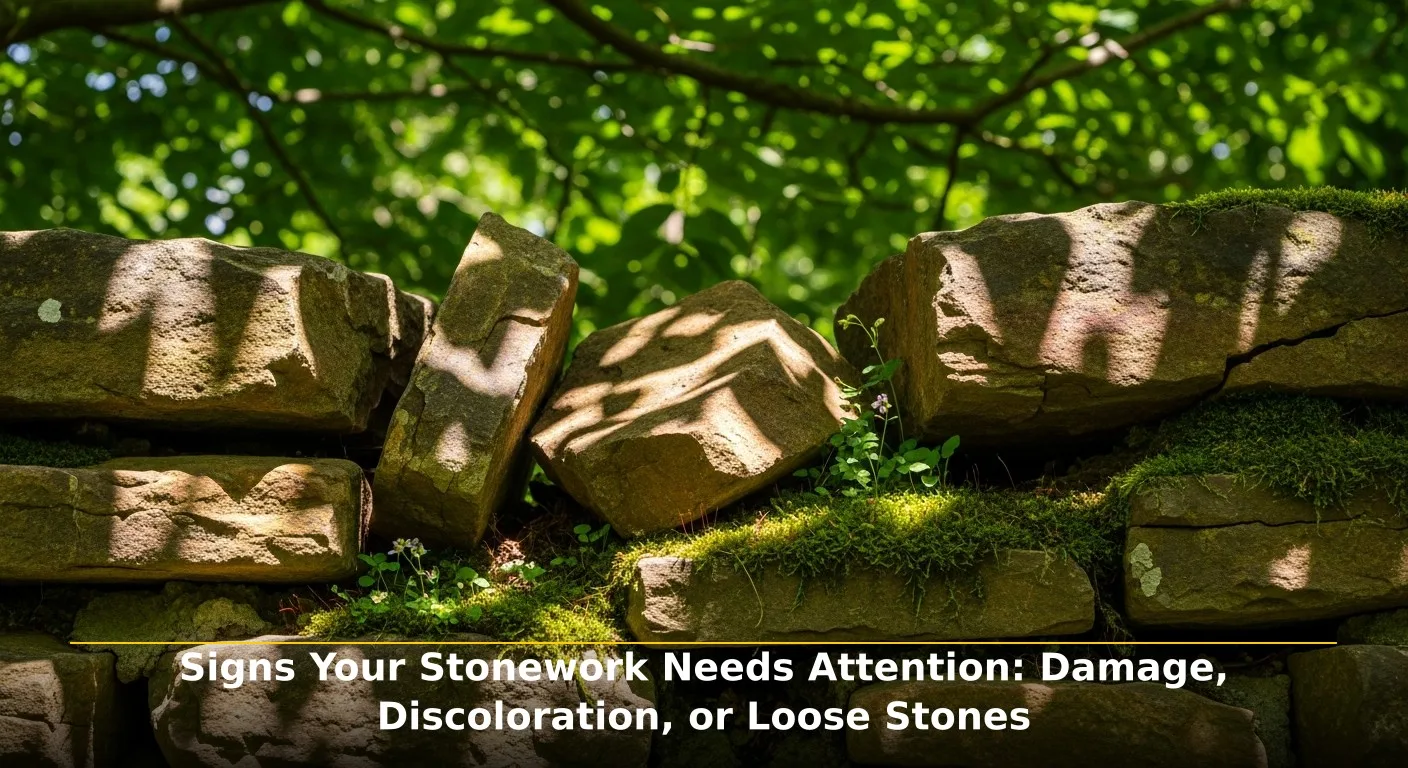
- Extensive Spalling: When the surface of the stone is flaking off over a large area, it indicates deep water saturation and freeze-thaw damage.
- Mortar Joint Deterioration: If mortars are crumbly, missing, or recessed deeply (more than ¼ inch) across more than 10%-20% of the wall or facade.
- Persistent Efflorescence: If it reappears heavily and quickly after cleaning, This signals persistent moisture problems needing to be addressed at its source.
Maintenance Action Thresholds: DIY vs. Pro
Issue | DIY Solution | Call a Pro When… |
Light Efflorescence | Stiff brush and water | It reappears persistently after cleaning |
Minor Mortar Cracks | Monitor for widening | Cracks are deep, widespread, or mortar is crumbling to the touch |
Small Spall Spot | Clean and monitor | Spalling is widespread or on a critical structural element |
Dirt & Algae | pH-neutral cleaner and soft brush | Stains are deep, or for cleaning delicate historic stone |
Winter Snow Removal | Plastic shovel, safe traction agents | Ice is bonded to stone; let it melt naturally rather than chipping |
4. The Professional Intervention: What to Expect from a Masonry Pro

Hiring a professional ensures the job is done correctly, preserving the value and safety of your property.
- Correct Diagnosis: Professionals identify root causes, not the symptom (e.g., a leaking chimney cap causing facade damage).
- Material Compatibility: They use the correct type of mortar (e.g., Type N or O for repointing) to match the original’s strength and flexibility, preventing damage to the surrounding stone.
- Proper Technique: From repointing to stone replacement, their techniques ensure lasting repairs that blend seamlessly with the original work.
- Quality Materials: Professionals have access to high-performance, vapor-permeable sealants and other products not available at retail stores.
Conclusion: An Ounce of Prevention
The rugged beauty of stone is meant to last generations, but in Minnesota, it cannot do so alone. A disciplined, seasonal maintenance routine centered on moisture management is the single most important factor in preserving your stone patios, walls, and facades. By conducting timely inspections, implementing the right cleaning methods, applying breathable sealants, and knowing when to call a professional, you can protect any home from the insidious damage of freeze-thaw cycles and ensure your masonry remains a source of pride and value for years to come.
Frequently Asked Questions About General Maintenance & Repair
1. How often should I reseal my stone patio or facade? Professional-grade, vapor-permeable sealants typically last 10–15 years. The “water bead” test can check effectiveness: sprinkle water on the surface. If it beads up, the sealant is working. If the stone darkens and soaks in, it’s time to reseal.
2. Can I pressure wash my stone patio? It is not recommended. High pressure can drive water deep into the stone and mortar, force out mortar from joints, and etch the surface of softer stones like limestone and sandstone. Use a low-pressure garden hose spray and a stiff brush instead.
3. What is the best way to remove ice from a stone walkway without causing damage? The safest method is to use a plastic shovel for fresh snow and apply sand for traction. For ice, magnesium acetate or calcium chloride-based ice melt is generally safer for masonry than rock salt (sodium chloride), but use any chemical sparingly.
4. Is efflorescence a sign of a major problem? Not always. Initial efflorescence on new construction is common as the masonry dries. However, persistent or recurring efflorescence on older work is a red flag for ongoing moisture intrusion issues needing investigation.
5. Why can’t I just use concrete mortar to repoint my stone wall? Standard concrete mix is too solid and inflexible for most stone masonry. Using it can trap moisture and cause the surrounding stone to crack during freeze-thaw cycles. A professional mason will use a lime-based or type-specific mortar that is compatible with the stone’s porosity and strength.
6. My stone facade has dark stains. What is it and how do I remove it? Dark, organic stains are likely algae or mildew. These can often be cleaned with a commercial stone cleaner designed for organic growth. Heavier staining could be from metallic components. For persistent or unknown stains, consult a professional to avoid damaging the stone.